

Why Public Speaking Is No Longer Optional—and How to Start Making It Your Superpower
From Nervous to Noticed: The Public Speaking Skills That Changed My Career

Hello, it’s Ethan & Jason. Welcome to Level Up: Your guide to grow fast, avoid mistakes, and make optimal career moves.
4 upcoming events (RSVP to attend live or to get the recording):
(Oct 28) How to Develop Executive Presence with Improv Comedy. Learn how humor commands the room and comedy tips that cut through the noise.
(Oct 31) Setting boundaries at work and at home. Learn how to compartmentalize, transition, and integrate your work and life.
(Nov 5) Executive Presence Killers: What’s Silently Holding You Back. Get the executive insider POV on how to showcase “Executive Presence”.
(Nov 19) Amazon VP Work-Life Balance Hacks. Top performers don’t achieve “perfect balance” between work and life commitments – they master strategic integration (and themselves).
We are thrilled to bring you (a follow-up) guest post by Lorraine K. Lee, keynote speaker and the best-selling author of Unforgettable Presence: Get Seen, Gain Influence, and Catapult Your Career.
You can do excellent work and still be invisible. The people who get tapped for high-visibility projects aren’t always the most experienced, but they’re the ones others remember. Public speaking (meetings, team updates, Q&A) is a skill you can develop, not an innate personality trait. Lorraine used to dread it until she realized she could use it to her advantage and elevate her career.
Here’s what you’ll learn in her post:
Why speaking is a career skill (not just a stage skill)
A 7-element attention toolbox for better presentations
Two frameworks for impromptu speaking + an exec-ready BLUF approach
Follow Lorraine on LinkedIn and subscribe to her Career Bites newsletter.
I Hated Public Speaking
I never set out to become a public speaker.
In the early years of my career, I was the classic “head-down, get-things-done” professional—comfortable in the background, known for moving fast and delivering accurately. Oh—and I dreaded public speaking.
I avoided it every chance I could. But as I set my sights on more senior roles, I hit a wall. I lacked both the visibility and confidence to grow into leadership.
Ironically, despite my discomfort with public speaking, I was deeply immersed in that world for much of my career. For over a decade, I worked at companies like SlideShare, LinkedIn, and Prezi—companies built around presentations and professional advancement—and as a founding editor, I collaborated with keynote speakers, business influencers, and subject-matter experts who often spoke for a living.
Over time, I’d come to realize that the people getting tapped for promotions and high-visibility projects weren’t necessarily the ones working the hardest or the ones who were the smartest—they were the ones who were remembered. The ones who could clearly articulate their ideas, lead with confidence in high-stakes meetings, and command a room.
Then 2020 happened, and I started to think about ways I could future-proof my career. The move to virtual allowed me to watch my coworker and mentor, Spencer Waldron (a public speaking coach and established speaker), in more settings. He appeared confident, articulate, and competent—all traits I wanted for myself.

In early 2021, I decided to take public speaking seriously—not just on stage, but in day-to-day environments like team meetings, stakeholder calls, and executive presentations. I got feedback. I stumbled. I did it scared. Little by little, I built the skills.
Today, I speak for a living, delivering keynotes to Fortune 500 companies, teaching the flagship public speaking course at Stanford Continuing Studies, and sharing my expertise as a bestselling author and LinkedIn Top Voice. Long before the keynote stages, speaking helped me get noticed, grow faster, and open doors I didn’t know existed.
Here’s how you can leverage speaking to become one of the most powerful tools in your career toolkit—whether you’re an introvert (like me!), a senior leader, or simply someone who wants to feel more confident sharing your voice at work.
Why Public Speaking Is a Career Skill (Not Just a Stage Skill)
When I first started learning public speaking, I assumed it was a skill you either had or didn’t. I figured confident speakers were born that way—that they somehow had a natural charisma or gift I didn’t. But the more I practiced and applied the feedback I received, the more I realized: public speaking is a skill. And like any skill, it can be learned, refined, and even mastered.
What surprised me most was how the work I put into more formal presentations started to spill over into everything else. I became better in one-on-ones, more articulate in team meetings, and more confident when giving updates to senior leaders. Practicing for the more nerve-racking “stage moments” sharpened how I communicated in everyday life.
In today’s workplace, public speaking shows up in so many forms, far beyond a stage. Here’s what it can look like:
Presenting a roadmap to cross-functional partners
Giving feedback in a high-stakes conversation
Answering clearly and concisely when an exec turns to you and asks, “What’s your take?”
How you speak in those moments shapes your presence and how others see you. People often assume strong speakers are confident, capable, and credible. Even great behind-the-scenes work can get overlooked if you can’t communicate it clearly and confidently.
That’s why I believe public speaking isn’t just a “nice to have” skill for people who enjoy the spotlight. It’s a career skill for anyone who wants to lead, grow, and be recognized.
The Presentation Attention Toolbox
One of the biggest misconceptions about public speaking is that it’s all about performance and stage presence (virtual or otherwise). But in reality, great presentations start with great content. The performance piece is the added layer.
Content earns your audience’s interest, while design and delivery determine whether they stay engaged—and take action. The best speakers are strategic communicators who combine clarity, storytelling, design, and delivery to create something memorable.
I saw this firsthand during my time at LinkedIn, SlideShare, and Prezi, where I helped shape thousands of presentations. The speakers who stood out weren’t necessarily the flashiest—they were the ones who thought deeply about what their audience needed, then built an experience to meet it.
That’s why I created my 7-Step Presentation Attention Toolbox—a framework I use in all my talks and teach to clients and teams. It helps you craft stronger content, structure it more strategically, and deliver it in a way that keeps people engaged.
While this isn’t an exhaustive list, these are the foundational elements I see most often overlooked:
The Opening
Don’t: Start with a table of contents, agenda slide, or kick off with your credentials.
Do: Hook your audience in the first 30 seconds—with a story, stat, or question that makes them want to keep listening. You can introduce yourself later, once you’ve earned their attention.
Think/Do/Feel
Don’t: Build your slides without first understanding who’s in the room and what matters to them.
Do: Before you create anything, ask: What do I want my audience to think, do, and feel by the end of this talk? What do they currently believe about this topic? (Shoutout to Spencer for teaching me this one.)
Movement
Don’t: Stay static. Our brains tune out when nothing in front of us changes (both in terms of content and your stage presence).
Do: Whether in person or on Zoom, introduce movement—fade-in bullets, slide changes, or a video. In virtual talks, aim for two changes per minute to keep things dynamic.
Visuals
Don’t: Rely on clunky, uninspired corporate templates.
Do: A few small tweaks—like replacing bullets with icons, using fade-ins, or rewriting slide titles to highlight takeaways—can instantly elevate your slides. You don’t need to be a designer (I certainly am not!).
Body Language
Don’t: Stay in one spot or minimize your gestures.
Do: Think about eye contact, posture, facial expressions, and gestures. Confidence is conveyed through your body—even on camera.
Voice
Don’t: Speak in a flat tone the whole time.
Do: Use the 4Ps—Pitch, Pace, Pause, Power—to create variety, emphasize key points, and keep attention.
The Closing
Don’t: End on an anticlimactic note (e.g. “That’s all I’ve got for today.”)
Do: End with intention. Reinforce your key takeaway, inspire action, or leave them with a clear next step.
I didn’t master all of this overnight. When I started, I chose one or two areas to focus on each time I spoke. Over time, those small improvements added up. I found myself not only giving better presentations—but becoming a clearer thinker, stronger communicator, and more confident leader in meetings, too.
How to Prepare for Impromptu Speaking (Yes, It’s Possible!)
I used to think impromptu speaking was a gift I just didn’t have. As an introvert, it seemed impossible to compete with colleagues who could speak up the moment a thought crossed their mind or answer questions on the spot with ease and eloquence.
What I eventually learned—thanks in large part to my mentor and friend Matt Abrahams (communication lecturer at Stanford GSB)—is that the people who seem most natural at impromptu speaking aren’t winging it. They’re using frameworks. They’re preparing.
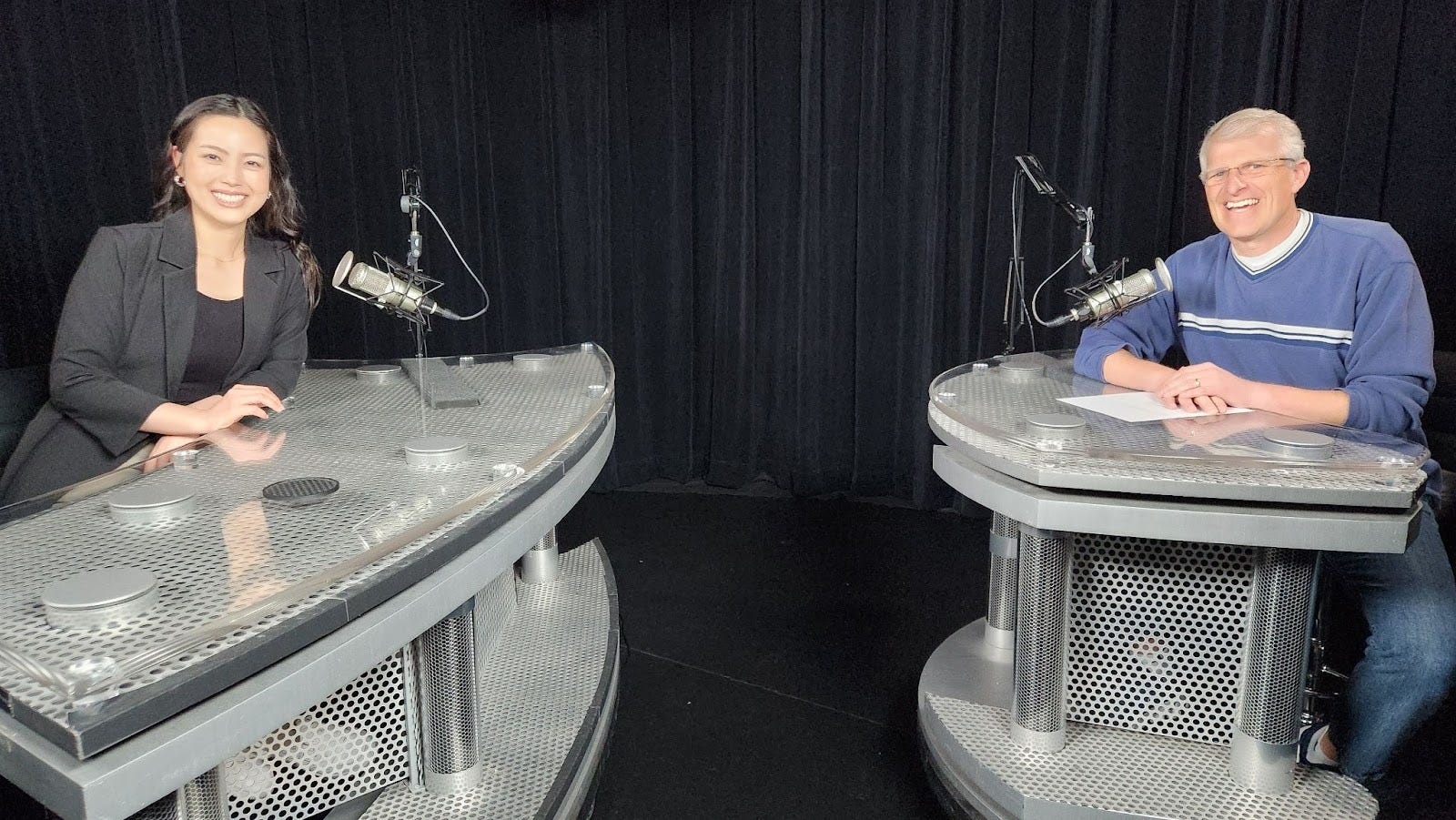
That lesson changed everything. Once I stopped trying to speak off the cuff and started practicing with intention, I realized I could actually get better at the high-pressure moments—the ones where someone turns to you mid-meeting and asks, “What’s your take?” or when you’re asked to deliver a quick update to senior leaders without any prep.
These moments can make or break how you’re perceived. You may not have a script, but you can have a strategy.
Use a Simple Framework
When you’re caught off guard, structure becomes your safety net. One of my go-to frameworks is one I learned from Matt — “What / So What / Now What”:
What: State your point or observation.
So What: Explain why it matters.
Now What: Offer a recommendation, next step, or action.
Another one I like for project updates is “Past / Present / Future”:
Past: Here’s what we’ve done.
Present: Here’s where we are.
Future: Here’s what’s next.
Both frameworks help you organize your thoughts and avoid rambling when you’re under pressure.
Practice Out Loud (Even By Yourself)
The best impromptu speakers I know don’t sound natural by accident—they practice sounding natural. It might seem counterintuitive, but I’ve seen this firsthand in my own keynotes: the more familiar I am with my content, the less I worry about what to say next, and the more present I am with the audience.
This applies to unscripted moments too.
One trick: Use AI as your sparring partner. Try a prompt like:
“Act as an executive and ask me tough questions about my upcoming roadmap presentation. The executive typically cares about Priority 1 and Priority 2.”
Then practice responding out loud using a framework. The more you train your brain to speak with structure, the more instinctive it becomes.
Pause—Even When It Feels Uncomfortable
Silence can feel excruciating, especially when an executive asks you a question. But a pause not only gives your brain time to catch up, it makes you sound thoughtful and deliberate.
When we’re faced with silence, most people will rush to fill in that silence, terrified of appearing unprepared (when I first started being a guest on podcasts, I noticed I was doing this a lot!). The result? We blurt out filler words like “um” or “yeah,” undermining the very confidence we’re trying to project.
The good news: pausing is a skill you can practice. Choose one of these to work on to get better at it:
Buy yourself time explicitly. Say something like, “Let me think about that for a moment.” Then actually take that moment. No one will judge you for it—they’ll appreciate the care you’re putting into your response.
Use body language to signal engagement. A slow, deliberate nod shows you’re processing the question. (Quick, rapid nodding has the opposite effect—it signals impatience or nervousness.)
Keep your expression neutral. Avoid “thinking faces” like furrowed brows or lip-biting, which can read as anxiety. A slight smile or calm expression projects confidence.
Count to three in your head. Three seconds will feel like an eternity to you, but to everyone else, it looks poised and intentional.
Think about the last time you watched someone pause before answering a tough question. Did they seem insecure? Or did they seem confident and in control? Chances are, it was the latter.
Don’t Aim for Perfection
Early on, I thought I had to sound super polished to come across well. But the more pressure I put on myself to be perfect, the more I stumbled.
What actually builds trust is clarity. If you can organize your thoughts and communicate them with purpose, it will be received well. Others will perceive you as credible and confident, even if you have a few filler words in there.
Pro tip: Before your next meeting, write down a thought or question you might want to share. Then read it out loud. Practicing how you’ll say something gives your brain a head start—so you’re not scrambling for the right words in real time.
Executive Communication (Win the Room, Fast)
When it comes to public speaking in general, the fundamentals matter: clarity, structure, confidence, and storytelling.
But when you’re speaking to executives, those skills need an added layer.
You’re dealing with an audience that has very little time, very little context, and very high expectations.
I learned this the hard way. Years ago, I was presenting to the CEO and executive team at Prezi. I had prepped thoroughly and created what I thought was a great, well-paced presentation.
Not even halfway through, I was interrupted. Questions started coming in rapid-fire. I was flustered and unprepared for the pivot.
This situation isn’t uncommon when it comes to executive communication.
That moment taught me something that stuck: executive communication is about getting to the point—fast.
Whether you’re giving a formal update or being pulled into a last-minute meeting, presenting to senior leaders is a category of its own.
Here are a few key principles I’ve learned for making the most of those high-stakes executive conversations:
Know your audience—and speak their language
In my book Unforgettable Presence, I had the chance to interview three dozen executives. One of them was Brendan Ittelson, Chief Ecosystem Officer at Zoom. He likes to be in the weeds, but he knows his executive coworker likes to be high-level. Each needs a different communication approach, even if you are talking to them about the same topic.Lead with the headline
One of the most effective tools in executive communication is BLUF: Bottom Line Up Front. Don’t build up to your point—start with the key takeaway, then share the supporting context. Remember, we love the backstory because we live in the day-to-day. But execs are removed from the details. You become much more of an asset when you can pull out only what they need to know.Anticipate questions
Executives will pressure-test your ideas. Think through what they might push back on and be ready to speak to it. This part is often forgotten, but it is just as important as the presentation itself.Don’t overload your slides
Your deck should support your message, not distract from it. Keep slides clean (one idea per slide), use data strategically, and avoid cramming in every detail. A quick glance at your slide should be enough to tell the executive what they need to know or take away.Be ready to pivot
Exec meetings rarely go as planned. You might get pulled into discussion mode halfway through or be asked to jump ahead. Be as prepared as you can, and when you’re caught off guard, don’t forget to lean on the frameworks from the section above!Always tie it back to the big picture
Your content should connect to business priorities. Why does this matter now? What strategic initiative does it support? Make it easy for execs to see how your work ladders up.
Final Thoughts
Public speaking may have once felt optional—but in today’s world of work, it’s one of the most powerful skills you can build to accelerate your career. It helps you get noticed, lead, and grow—regardless of title, team, or personality.
The good news? You don’t need to be the loudest in the room to make an impact (I’m certainly not, as an introvert). You don’t have to love the spotlight, but you do need to be intentional. Public speaking is a skill, and like any skill, it strengthens with practice.
Many people avoid it because it’s nerve-wracking—we’ve all heard that stat about people fearing public speaking more than death. But if you can be the one to push past that discomfort, it can set you apart in ways you may not even be able to anticipate yet.
Once I started building confidence, doors began to open. I was tapped to represent my team in the company all-hands, lead cross-functional meetings, and even fill in at a media roundtable when a colleague was out. I wasn’t the most senior, but I’d become someone leaders saw as confident and capable—all because they’d seen me speak.
Public speaking isn’t just about getting on a stage. It’s about learning to communicate with purpose, show up with presence, and lead from wherever you are. And when you do that consistently, people don’t just remember what you said—they remember you.
Read (or revisit) Lorraine’s first guest article on The New Rules of Presence: How to Stand Out and Get Ahead.
Thank you, Lorraine, for showing us that speaking up is a skill (not a personality trait) and for sharing practical, actionable advice to turn it into a career accelerator.
Follow Lorraine on LinkedIn and subscribe to her Career Bites newsletter. She is recognized as a LinkedIn Top Voice, instructor with LinkedIn Learning and Stanford, and has a decade of experience leading editorial teams at top tech firms. Her insights have appeared in outlets such as CNBC, Bloomberg, and Fast Company.
If you found this valuable, give it a like and share it with your team—it helps us know what to bring you more of.
Level Up Community Spotlight
Launched by Ashley Buxton (EVP at Mediahub), IPG Mediabrands’ Level Up Series (not to be confused with this newsletter) is an internal-company fireside chat program built to give teams the tools to grow their careers and sharpen their soft skills. Each session pulls back the curtain with candid conversations from proven senior leaders who share the habits, mindsets, and strategies that drive high performance and lasting growth.
In October, I (Jason Yoong) shared my experience on how to advocate for yourself with clarity, confidence and impact.
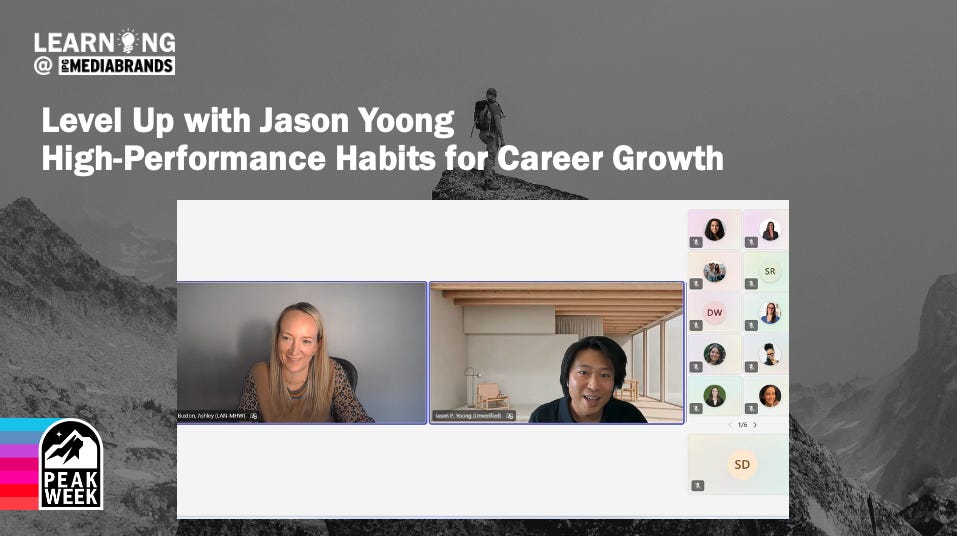
If you are passionate about inspiring the next generation of leaders, message Ashley on LinkedIn to become IPGs next guest speaker.
(Jason here: Ashley and I are good friends, were co-workers many moons ago, and she is a bar raiser. I highly recommend reaching out. Her sharp questions and engaged audience made for an energizing time).
Sponsor this Newsletter
The Level Up Newsletter is trusted by ambitious professionals scaling companies and careers across Fortune 500s, Big Tech / FAANG, and high-growth startups.
Our readers are exec-track leaders, builders, and decision-makers — if your product helps people work smarter, scale faster, or lead better, this is your audience.
Sponsorships are limited and curated. We only partner with brands our audience will thank us for introducing them to.
Explore our newsletter sponsorship options and get in touch.
Connect With Ethan & Jason
Follow Ethan on LinkedIn.
Get our career advice on YouTube.
Connect with Jason (Ethan’s Cofounder & COO) on LinkedIn.
Learn more about our live online courses and on-demand courses.
Contact us for corporate training, keynote speaking, guest writing, and more.
Join our Level Up Slack Community of 1300+ members and 23 specialized career channels with active peer support.
 | A guest post by
|
Being a storyteller is what public speaking is all about. Thanks for the tips and personal testimonial!
I really liked how Lorraine turned fear into an advantage in her career, it's truly inspiring.