

Why People With Half Your Talent Seem to Keep Winning
The uncomfortable truth about career growth: talent is not enough — visibility, advocacy, and manager alignment turn hard work into promotion


Hi, it’s Ethan & Jason from Level Up: Make career breakthroughs with AI-proof leadership skills.
Two upcoming talks, RSVP below:
(June 27) The Executive Presence Masterclass. Learn to reframe your responses for C-suite buy-in and handle tough questions with clarity and confidence.
(July 15) Top of Mind: Two Thoughts + AMA with Ethan. Learn what Ethan is studying and get your question answered live. Exclusive to Level Up Members.
Why People With Half Your Talent Seem to Keep Winning
Watch on YouTube.
In this talk, Ethan and Codie Sanchez break down why talented people get passed over, why “corporate politics” is often just competing incentives, how to turn your boss into an advocate, why asking for money or promotion the wrong way backfires, and what Jeff Bezos taught Ethan about long-term ambition, tactical urgency, and decision quality.
Brought to you by MyClaw
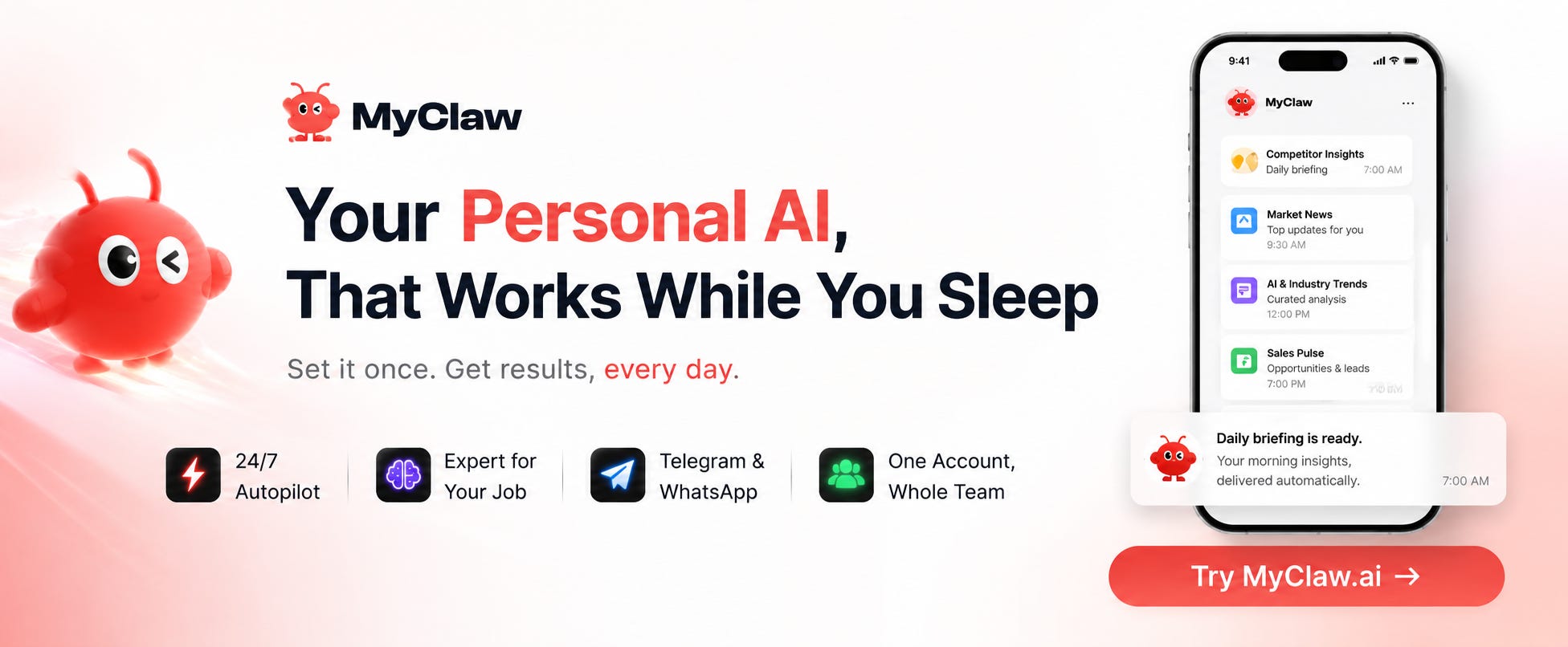
Run Your Personal AI Assistant in Minutes — Powered by MyClaw
MyClaw isn’t just another AI chat. It’s a cloud-hosted OpenClaw assistant that runs recurring jobs, automates research, and delivers AI-generated briefings directly to Telegram or WhatsApp. Imagine waking up to the answers you need—without even asking. No servers or setup required.
Start free now and get your personal AI assistant running in minutes.
Key Takeaways
Hope is not a career strategy. A lot of smart people burn out because they lose the thread of where they are going. They keep their head down, work hard, and hope someone notices (“work hard and hope to be noticed”). The blunt truth is: hope is not a very good strategy. The antidote is to know what you want, know where you are going, and then work with your manager to get there. Make a deal. The invisible high performer often loses to the visible good performer, not because the system is fair, but because managers are busy, distracted, and allocating scarce attention. If you want your work remembered, make it easy to remember.
Every time you say “should,” you give away agency. When you think, “My manager should be looking out for my career,” you have stopped owning your career and handed control to someone else. The better question is: “How am I going to make sure this happens, or what will I do if they don’t?” The word “should” feels righteous, but it makes you passive. Ownership starts when you stop waiting for the system to behave correctly and start deciding what you will do next.
Corporate politics is not always evil. It is other people pursuing what they want. Most people are not waking up trying to hurt you. They are trying to advance their own goals (sometimes you are accidental roadkill, sometimes it is intentional). Either way, your job is to stop being shocked and start studying incentives. Ask yourself: What does this person want? Why is the company rewarding that behavior? Where do your goals align, and where are they in conflict? Politics becomes less mysterious when you see it as competing incentives, not random unfairness.
The Magic Loop: become useful before you ask to be rewarded. The premise is not “be nice to your boss.” It is: find out what your manager needs, help them win, then ask them to help you grow. Ethan discovered this early when he helped a new boss understand the technology. She saw him as helpful and on her side, took him under her wing, and promoted him twice over two years. The deeper lesson is reciprocity: people help people who help them.
Warning. If you ask your boss how you can help, then fail to deliver, you are worse off than if you had stayed quiet because now you have created an expectation and broken it.
Be a “poop taker,” not a “poop bringer.” Most employees bring their manager “bags of poop” (problems without solutions). The rare employee says, “What do you need? I see that ugly problem; let me take care of it.”
Make decisions by proxy (advanced version). Do not just ask your boss to choose between A and B. Say: “Here are the options, here are the tradeoffs, I recommend A.” At the advanced level: “I know how you think, so I’ve gone ahead with A for 123 reasons. It is reversible if you disagree.” That is when your boss thinks: this person is magic. They are making money for me and removing work from my plate.
Here’s an in-depth advanced course on The Magic Loop.
Promotions come from results, not effort. Hard work is not the differentiator. Lots of people work hard. The people who get promoted drive outcomes the business values: revenue, cost reduction, customer impact, customer growth, speed, quality, or risk reduction. Companies promote what they want more of. They may even promote people they do not personally like if the results are strong enough.
Action: audit your calendar. If you cannot explain how your work connects to meaningful business results, you may be busy but low impact.
Ask for promotion or money by leading with value, not entitlement. The wrong script is: “I deserve more,” “I want a promotion,” or “Why am I not moving faster?” That comes across as self-centered. The better script is: “We just delivered strong results on X. I want to grow my career and deliver more of that for XYZ company. As part of that, I’d like to work toward promotion and a meaningful compensation increase. What could I deliver where that would make sense for XYZ company?” That changes the conversation from “give me more” to “let’s define the value exchange together for the company.” Ethan coached an Amazon employee with a Meta offer, helping them go from $300K to $750K because the value and market signal were real.
Great managers are umbrellas, bad managers are funnels. Umbrella managers absorb pressure from above and protect the team so they can solve the problem. Funnel managers simply pass blame downward. Ethan once led a failed launch for Jeff Bezos and his boss, Paul Ryder, physically stepped in front of another senior executive (Ethan’s skip) and said, “If there’s any problem here, address it with me. This is my team and I’m solely responsible.” The senior executive still insisted on talking to Ethan, but Paul had shown what good leadership looks like: ownership travels upward, not just downward.
Jeff Bezos combined long-term patience with daily urgency. Ethan’s biggest lesson from Jeff: “Be strategically patient but tactically impatient.” Valuable businesses can take 10 years to build, but that does not excuse drifting today. He pushed teams on what they accomplished that day while still being willing to wait years for a big vision to mature. That same mindset showed up in Amazon’s six-page narrative meetings. Jeff hated PowerPoint because slides can bury risk and manipulate attention. In narrative meetings (for big product decisions or updates), everyone read quietly (20-25 minutes out of an hour), sentence by sentence, and Jeff’s lens was “Whenever I read one of these documents, I stop on every sentence and ask, do I believe that?” After reading, the expectation was everyone in the room was to pretend it was your business, your goal was to figure out if the idea was good or not, how you could improve it, and give your best thinking. There was no particular speaking order, but Jeff would often speak last so his opinion would not collapse the debate too early. Oftentimes the owner of the document would lead with “Should we go line by line” and start reviewing / debating the document from the top (e.g. “Any questions or comments on the first paragraph?” and move on).
Jeff Bezos on “No, this is how we learn.” During a meeting, Ethan’s manager (an Amazon VP) had a long and heated debate with Jeff. The CFO stepped in and asked “Jeff, do you want me to shut this down?” Jeff replied “no, this is how we learn, I want people who push back” and let the disagreement continue for 6 more rounds, explaining his logic and defending it. Culture is not what you announce; it is what leaders tolerate and model in high-pressure rooms that trickles down.
Know someone who is working hard but not getting noticed? Forward this to them — it might be the career nudge they need.
Connect With Ethan & Jason
Follow Ethan on LinkedIn.
Get our career advice on YouTube.
Connect with Jason (Ethan’s Co-Founder & COO) on LinkedIn.
Learn more about our live online courses and on-demand courses.
Contact us for corporate training, keynote speaking, guest writing, and more.
Reach out if you want to sponsor this newsletter trusted by leaders and builders scaling companies and careers across Fortune 500s, Big Tech / FAANG, and high-growth startups.
This hits hard because when I started my business four years ago, I could have been much further along if I didn't overthink everything or want everything to be perfect.